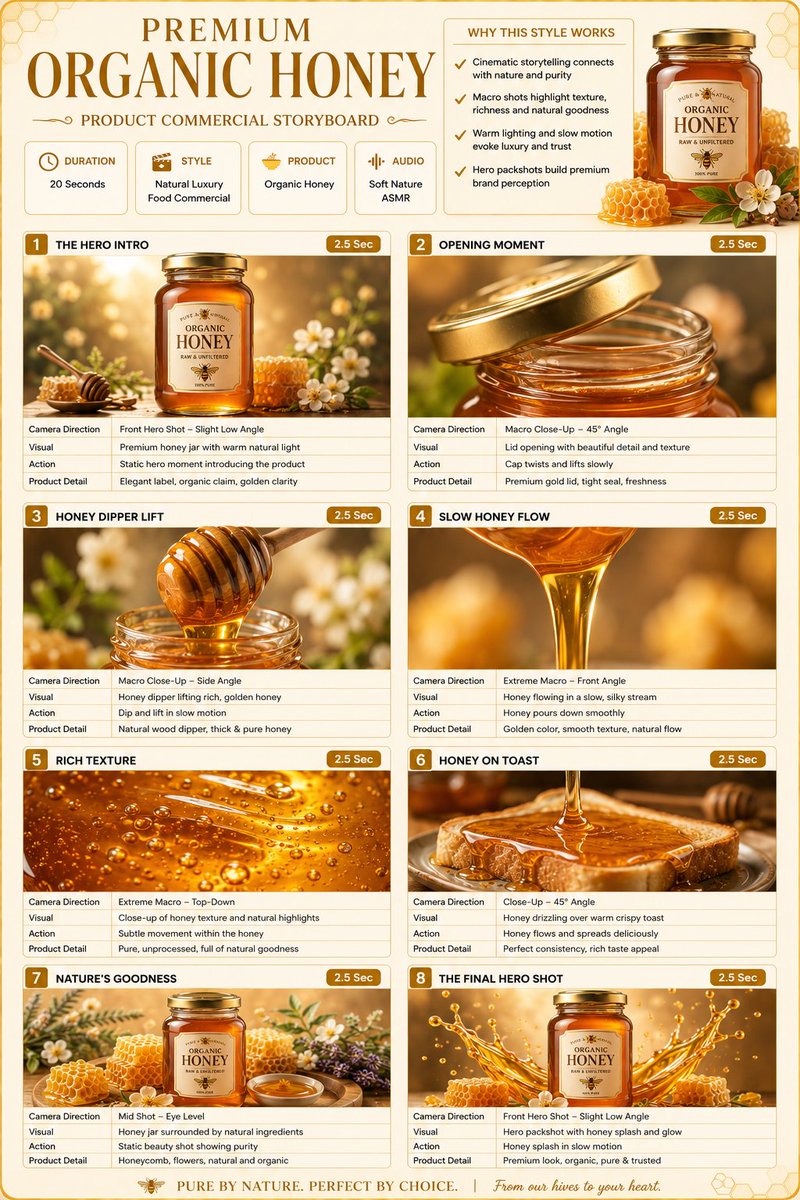
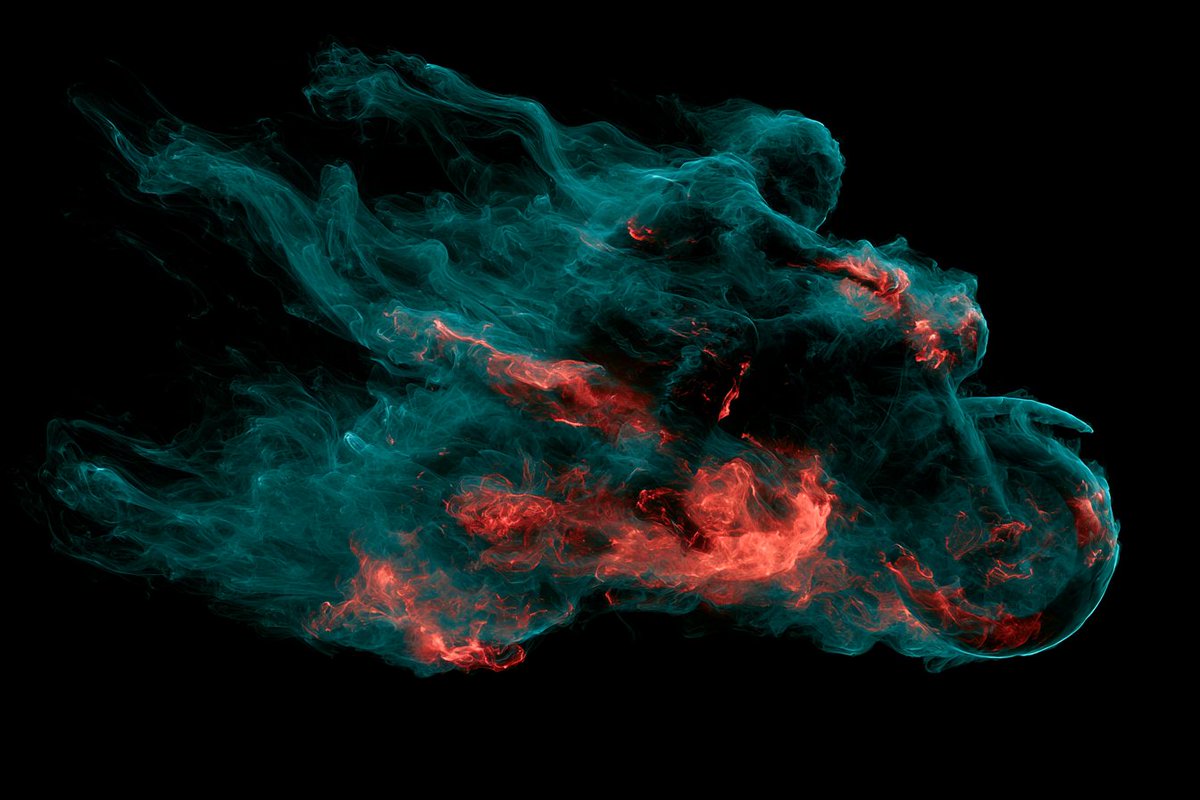
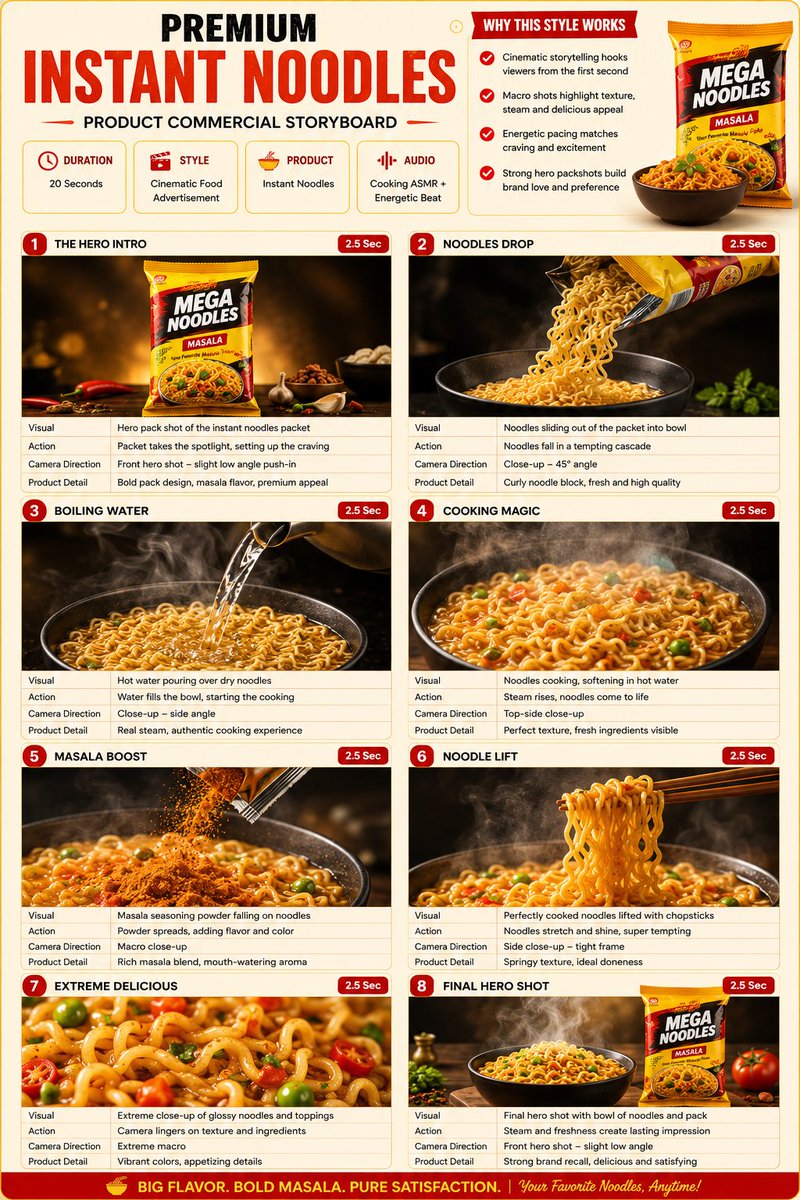
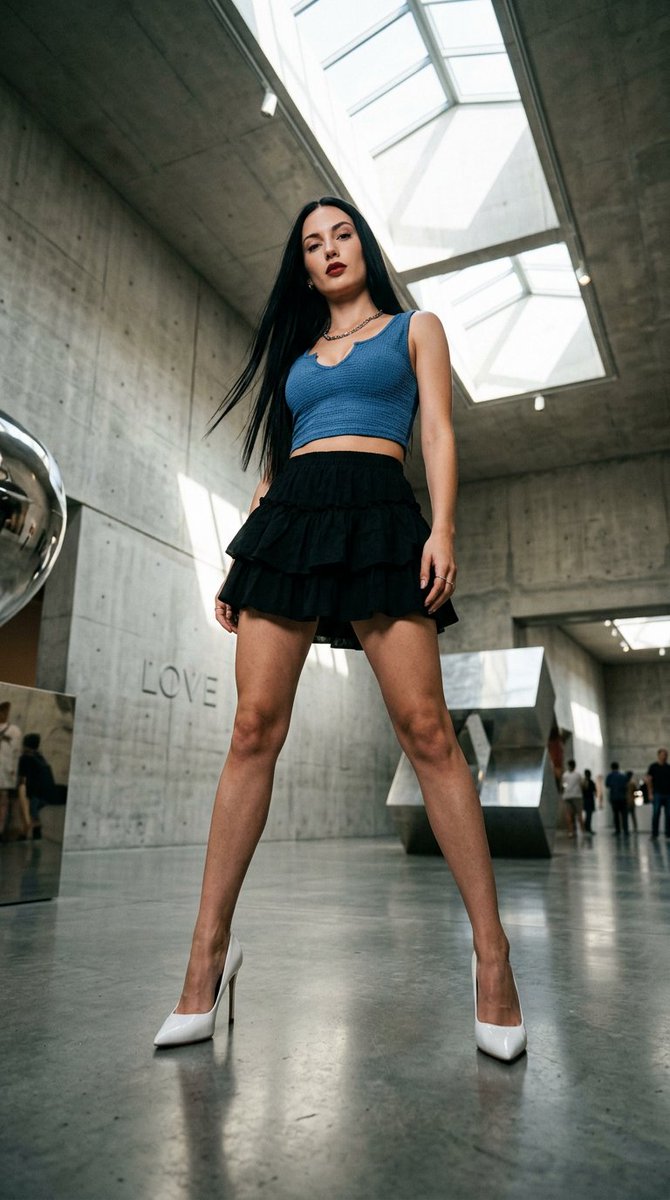
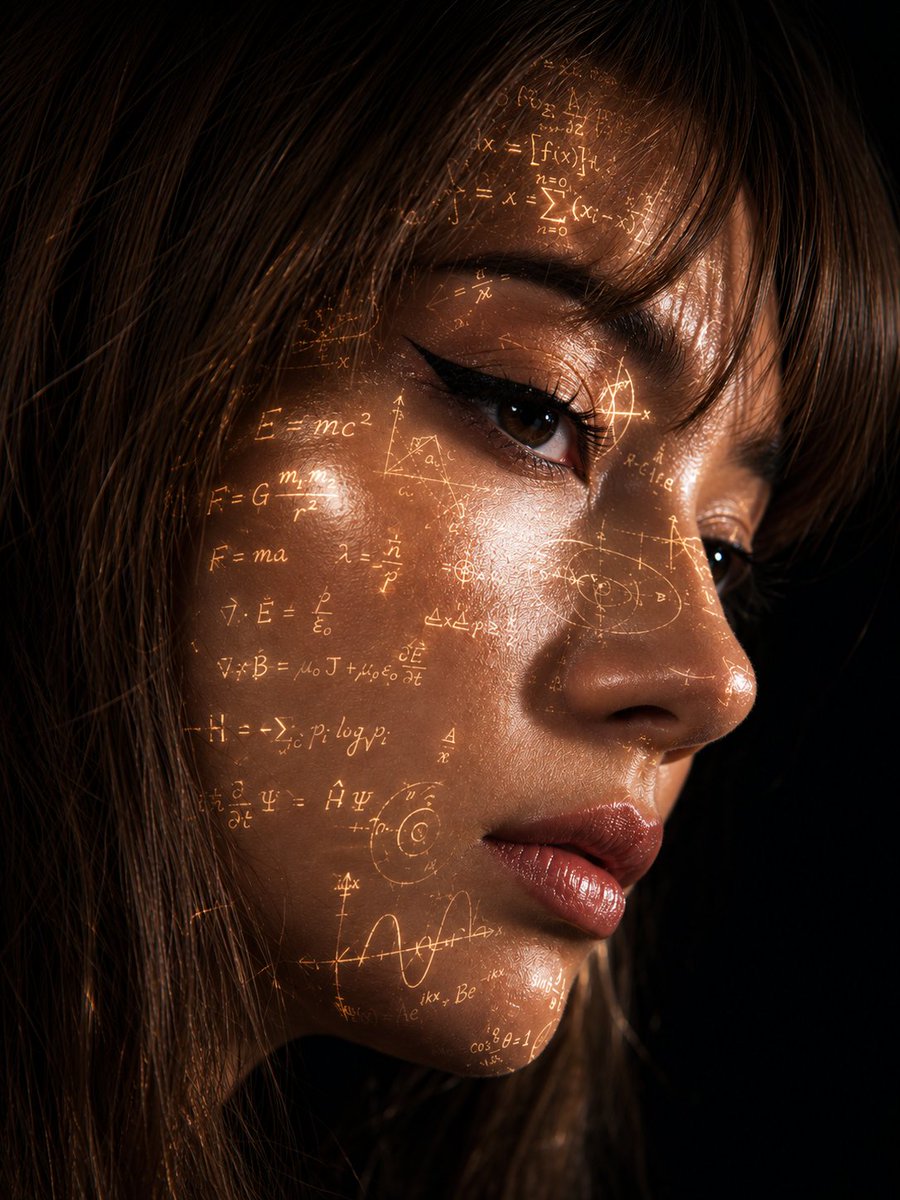
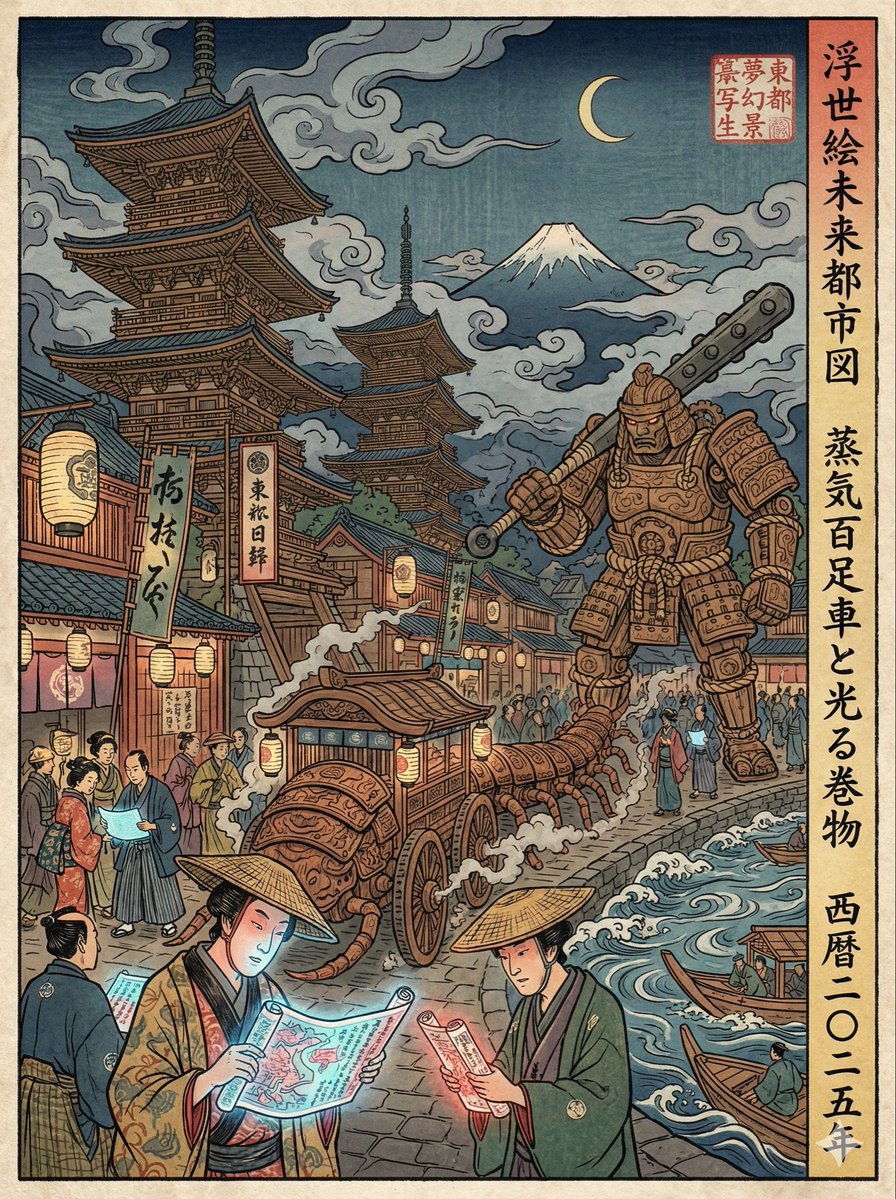
Edo-period Ukiyo-e reinterpretation of a modern scene
A highly-structured image prompt to depict a modern-day scene reimagined as an Edo-period Japanese Ukiyo-e woodblock print, with detailed guidance on anachronistic tech, composition, texture, and color.
How to Use This Prompt
- Copy the full prompt text with the copy button above.
- Replace any [bracketed] placeholders with your own subject, scene, or details.
- Paste it into Gemini / Nano Banana Pro — or hit "Try this Prompt" above to generate here for free — then tweak the wording against the example images.
Style Notes
- Architecture
- Buildings and structures with believable perspective and materials — wide lenses, strong leading lines, attention to light on facades.
- Group Scene
- Multiple characters in one frame — the hardest case for AI consistency; prompts usually assign each figure a position and role explicitly.
- Illustration
- Hand-drawn or digital-painting aesthetics — visible strokes, stylized shapes and colors, deliberately not photoreal.
- Marketing Campaign
- Ad-ready imagery: clear product or message hierarchy, space reserved for copy and logos, and a polished commercial finish.
- Portrait Orientation
- Vertical aspect ratio (e.g. 3:4, 9:16) — the native format for phone screens, Stories, and app store screenshots.
- Poster
- Single-image layout designed to be read at a glance: dominant visual, title-friendly composition, high contrast for print or thumbnail.
- Surreal
- Deliberately impossible imagery — dream logic, scale distortions, unexpected object combinations — where the model's "mistakes" become the style.
FAQ
How do I use this prompt with Gemini (Nano Banana Pro)?
Copy the full prompt with the copy button above, paste it into Gemini or any Nano Banana Pro-powered tool, and compare your result with the example images on this page. You can also click "Try this Prompt" to generate directly on this site — free daily generations, no sign-up needed.
Can I customize "Edo-period Ukiyo-e reinterpretation of a modern scene"?
Yes. Anything in [brackets] is a placeholder meant to be replaced with your own subject or details, and you can freely adjust subject, lighting, or style keywords — small wording changes often produce noticeably different results.
Which AI models does this prompt work with?
It was originally shared for Google's Gemini image models (including Nano Banana Pro). Most text-to-image models will understand it too, though composition and text rendering quality vary by model.